





In recent times, the National Highway Traffic Safety Administration (NHTSA) reported that driver error constitutes 94% of road crashes in the US, ranking first in road accidents worldwide.
In a report, the agency blamed drivers’ distraction as the primary cause of accidents, which is often fueled by drivers’ negligence. One option to prevent driver errors in vehicles is the technology of autonomous vehicles.
An autonomous car is a driverless car without any driving input that the conventional car possesses. Autonomous vehicles are a product of high technology that seeks to occlude drivers’ contribution to accidents, providing safety, convenience, and security.
But how safe is a car without a human driver? Well, with much concern, safety is possible. How does an autonomous car navigate and recognize routes and other vehicles on the road? How does it really work?
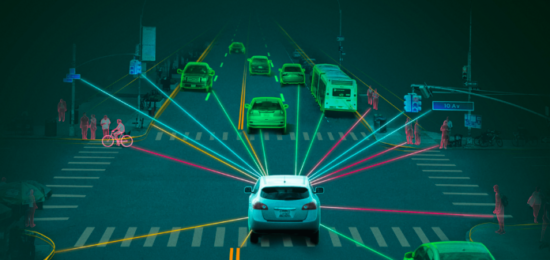
Basically, cars of this sort rely on advanced machine learning systems and algorithms, sensors, processors, and actuators. Autonomous cars capture their surroundings depending on the various classical sensors positioned at different parts of the car; one such sensor is the radar sensor that detects several positions of nearby vehicles.
The sensor camera detects traffic lights, reads and transmits road signs signals, and identifies pedestrians. The Lidar sensor measures the distance from other vehicles by relying on light detection; the Lidar sensor detects light from other cars and detects road edges and lane markings.
The ultrasonic sensor located in the car wheel helps detect a kerb and other vehicles when parking. The in-built software then processes all sensory detections and sends commands to the car’s actuators, which execute the acceleration, brake, and steering.
Complex coded rules enable autonomous vehicles to recognize objects and signs and navigate barriers. Despite the high-tech sophistication of autonomous vehicles, many are still skeptical about this self-driving technology, even when the Insurance Institute for Highway Safety (IIHS) estimated that one-third of road crashes could be overcome when autonomous vehicles are used.
Would you still feel uncomfortable traveling in an autonomous vehicle? Share your thoughts
Join the conversation; follow us on Facebook, Instagram, and Twitter at GoSpeedHub.
Image Source – IJIED