




Technology has birthed mind-blowing inventions that most people would not think fathomable.
Unlike the conventional use of a wristwatch to meet engagements and meetings, today, that is just a fraction of the numerous advantages to enjoy when you own a smartwatch.
Smartwatches are built with an IP67 feature that protects them from water intrusion. Smartwatch users can wash their hands or swim without fear of damage because of its waterproof quality.
Also, smartwatches have become profoundly useful in serving medical purposes such as heart rate and blood pressure monitoring. Unlike standard medical devices, the smartwatch relies on a biosensor that rests against an artery in the wrist and detects the nature of the pressure wave, which depends on blood flow pressure.
This special feature has been proven accurate and thus has been approved by the Food and Drug Administration (FDA) in the USA to help users monitor and maintain healthy heart rates and blood pressure as they carry out their daily routines.
Moreso, the smartwatch features a pedometer to estimate the distance covered over a specific time frame.
Smartwatches come with a feature to also monitor sleep patterns at different intervals, keeping accurate track of sleep and wake periods.
In addition, the Bluetooth 4.0 sedentary reminder stays connected to smartphones and gadgets in fixing and managing time and calendar engagements.

The App support above Andriod 4.4 and IOS 8.4 is designed for handheld device compatibility with a magnetic charging ability and many other features.
Tech companies like Samsung, Apple, Huawei, etc., specialize in designing smartwatches.
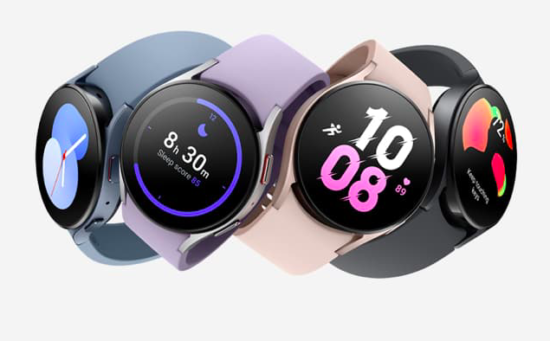
One of Samsung’s latest smartwatches, the Galaxy Watch 4, features many health and fitness apps, including bioelectrical impedance analysis, blood pressure measurement, heart rate monitoring, and electrocardiogram (ECG) analytic features.
Galaxy Watch 4 has a higher functioning quality than older versions of smartwatches, but a con is that it only functions maximally for Samsung phone users.
Apple Watch Series 7 would be the choice smartwatch for conscientious users because it offers more health features than Galaxy Watch 4, like blood oxygen determination, electrical heart rate sensor, fall detection, and emergency calls.

For a low-maintenance running smartwatch, Huawei Watch GT 3 may be preferred due to its long battery life, lasting up to two weeks, unlike the recent Samsung and Apple smartwatches that last 2-5 days.
Although Huawei Watch GT 3 has some health features like heart rate monitoring and blood pressure determination, it is quite limited in functionality when compared with Galaxy Watch 4 and Apple Watch Series 7.
While smartwatches vary in price according to the features, Galaxy Watch 4 can be purchased at an average cost of $340, the Apple Watch Series 7 costs an average of $349, and Huawei Watch GT 3 is tagged at $340.
Choose a smartwatch that suits your preference and enjoy the best experience.
Join the conversation; follow us on Facebook, Instagram, and Twitter at GoSpeedHub.
Image Source – Samsung, Apple, Huawei