





SIM( Subscriber Identity Module) Cards, since their creation, have been the backbone of mobile phone technology.
It is that small chip that, when inserted into a mobile phone, authenticates a user’s details to carriers and helps a user make phone calls, send messages, access the internet internally, etc.
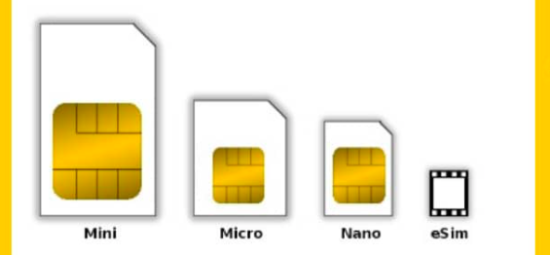
The first form factor of SIM cards was created in 1991 and almost looked like a credit card due to its size. It then evolved to the Mini Sim (second form factor) size in 1996. Then in 2003, the third form factor of SIM card was introduced, known as the Micro Sim, and it was a cut out from the then-existing mini sim.
It was not adopted into mobile phones until 2010. In 2012, the fourth form factor was created, known as the Nano Sim, and, as usual, was a cut out from its predecessor, the micro sim.
The year 2016 saw the rise of a different sim technology as the eSim ( fifth form factor) was announced. The eSim, short for embedded sim, is a chip inserted directly into smartphones right from the time it is manufactured. These SIM cards allow users to activate services digitally.
There are a lot of pros and cons attached to the eSim technology. Let’s talk about them briefly.
Advantages of eSim
- Users can easily have multiple numbers and profiles on a single device
- It takes less space as the eSim is only 15% of the nano sim
- Securely block the phone in cases where it is stolen
- Switching mobile network providers is simple.
- While traveling, users can switch to the local network for calls and data in order to save on roaming charges.
- eSim can be updated over time to reduce vulnerabilities.
The disadvantages of eSim
- It is all digital, which is inconvenient for those who are not technologically savvy.
- To use the eSim technology, you have to own a high-end device, which is more expensive
- It is not widely available yet
Apple announced that US-manufactured iPhone 14 series phones will have no physical sim slots, which is a huge technology shift for the eSIM and will make it more widely accepted as a sim technology worldwide.
Do you like the eSim technology?
Is the world ready to shift to this eSim technology according to its pros and cons? What do you think about the eSim?
Join the conversation; follow us on Facebook, Instagram, and Twitter at GoSpeedHub.
Image Source – MTN